Physical–digital system · Hardware-constrained UX · Product design
Client:
Swellaway Ltd
Domain:
Health & recovery hardware
Role:
Product Designer
Focus:
Physical + digital system
Status:
In market
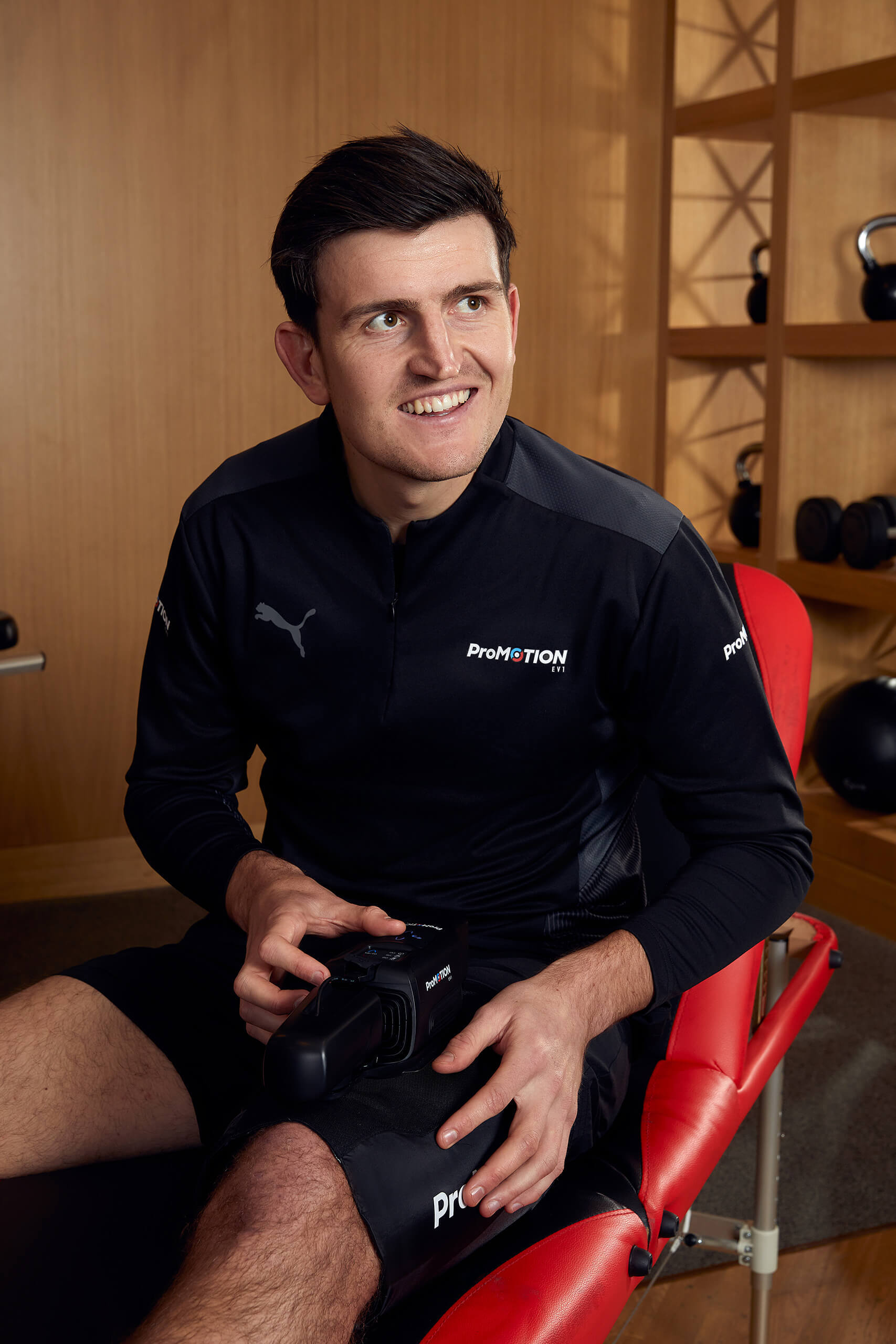
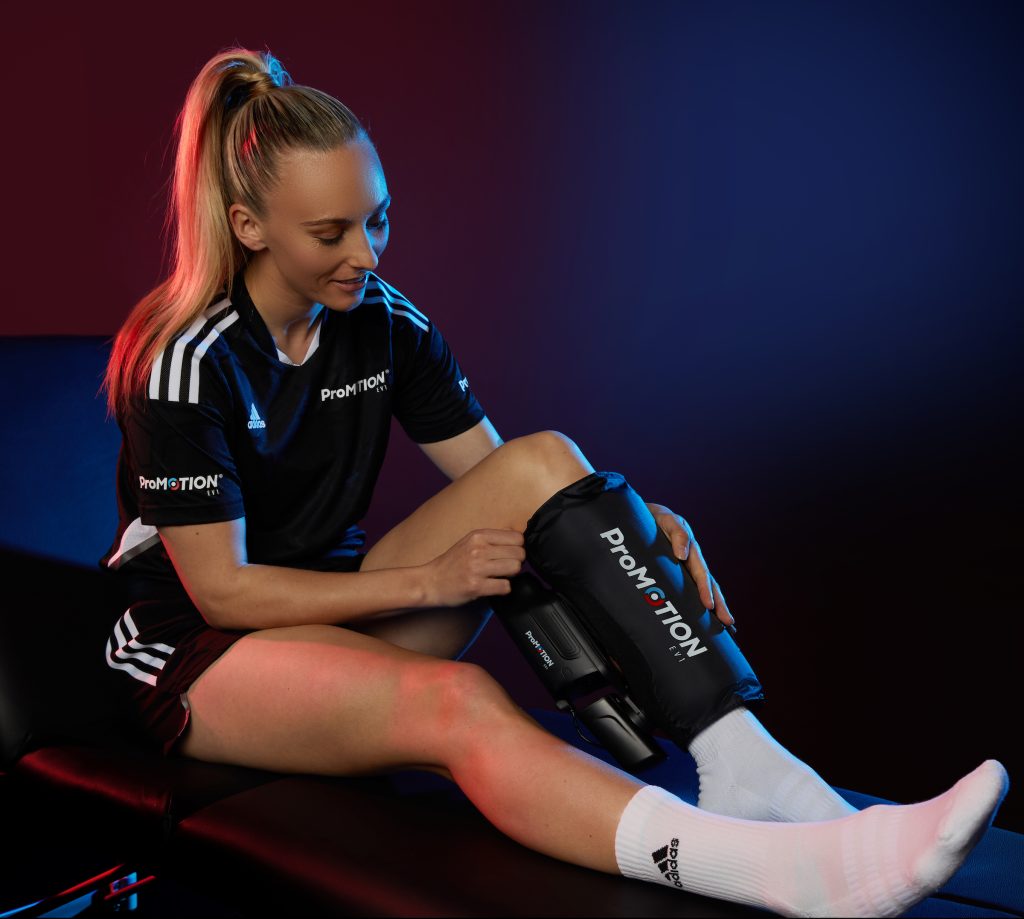
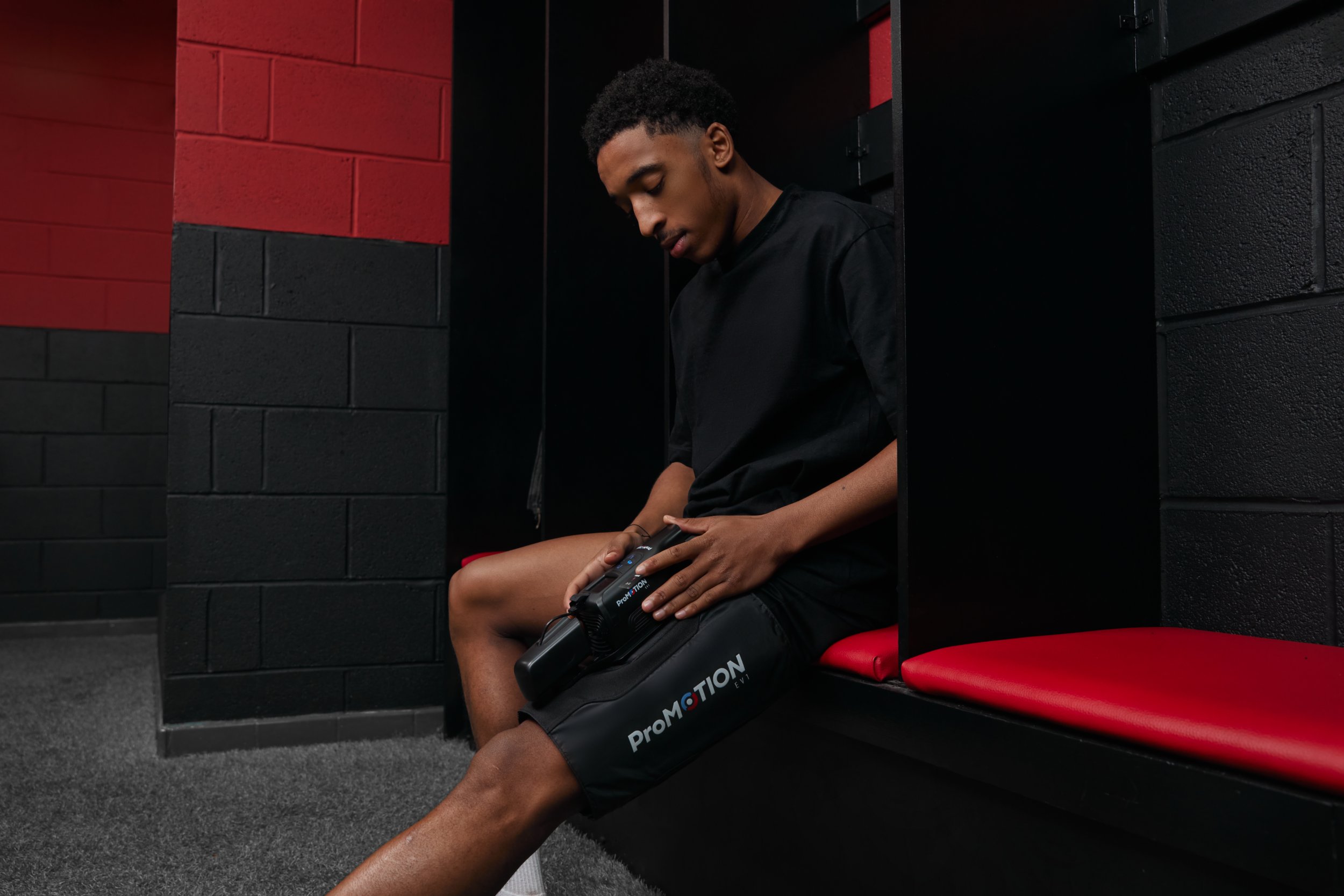
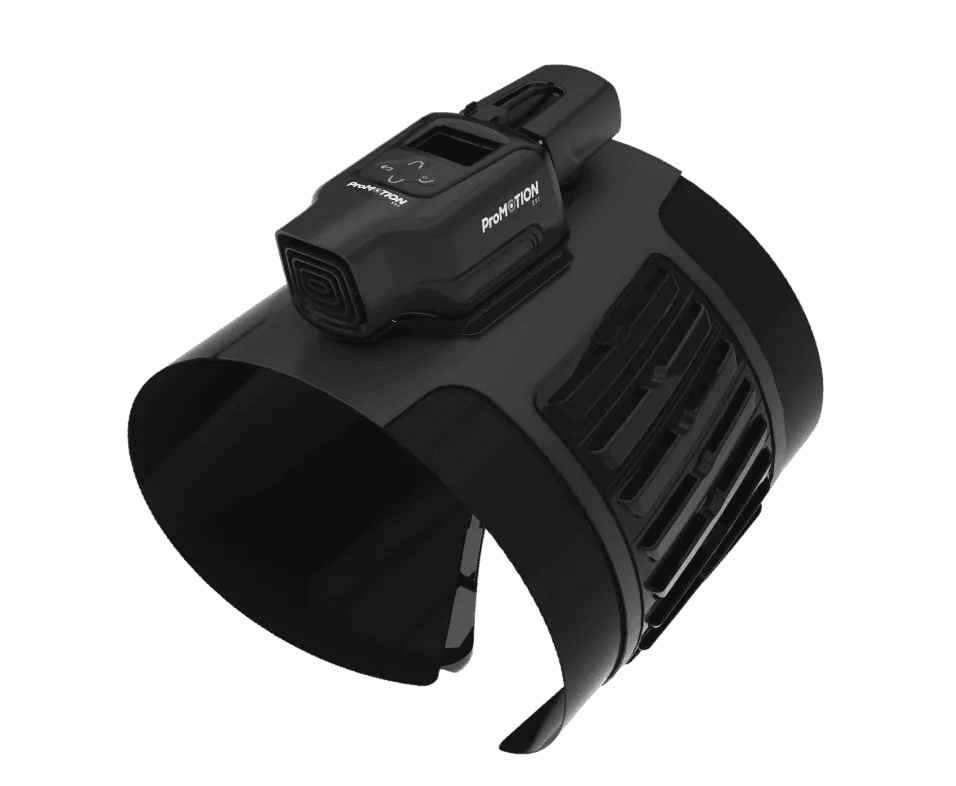
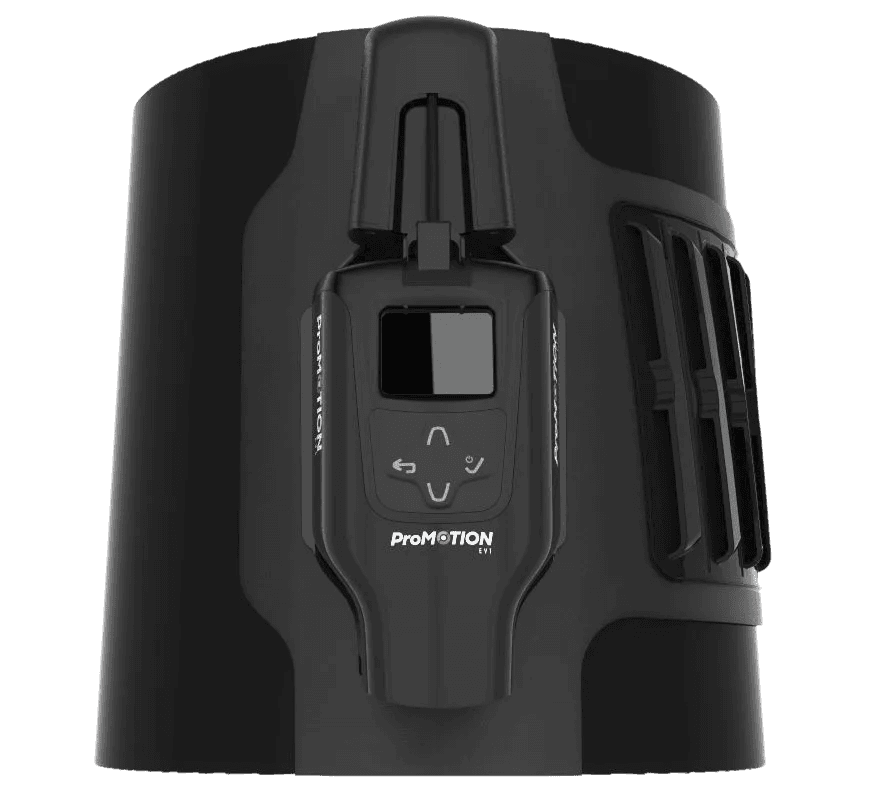
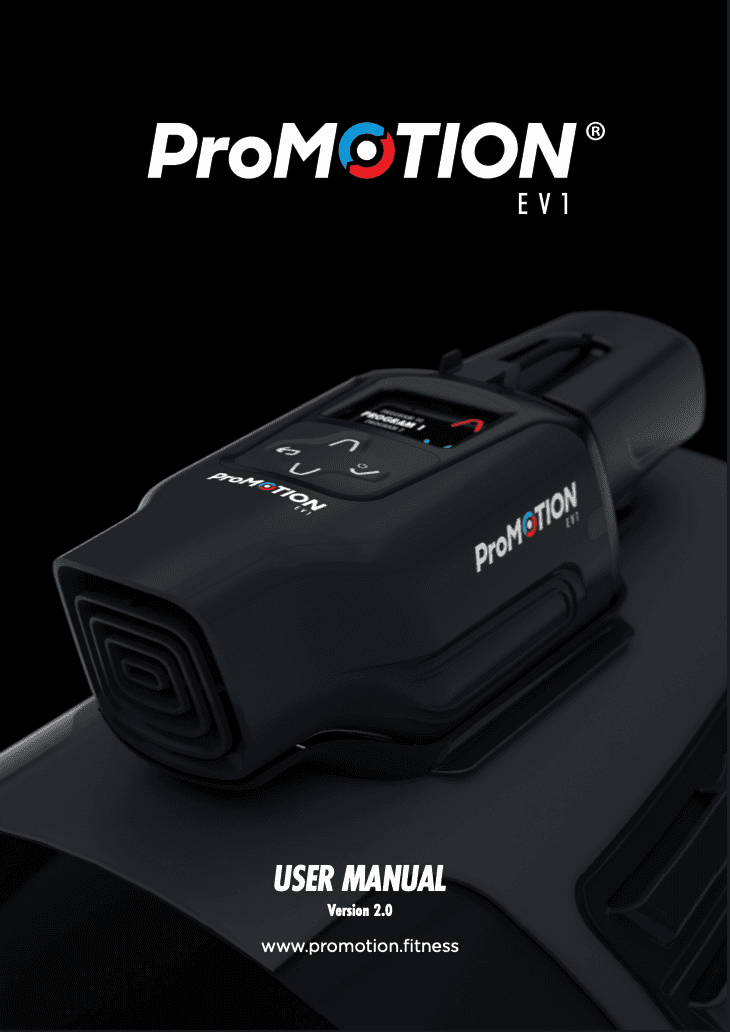
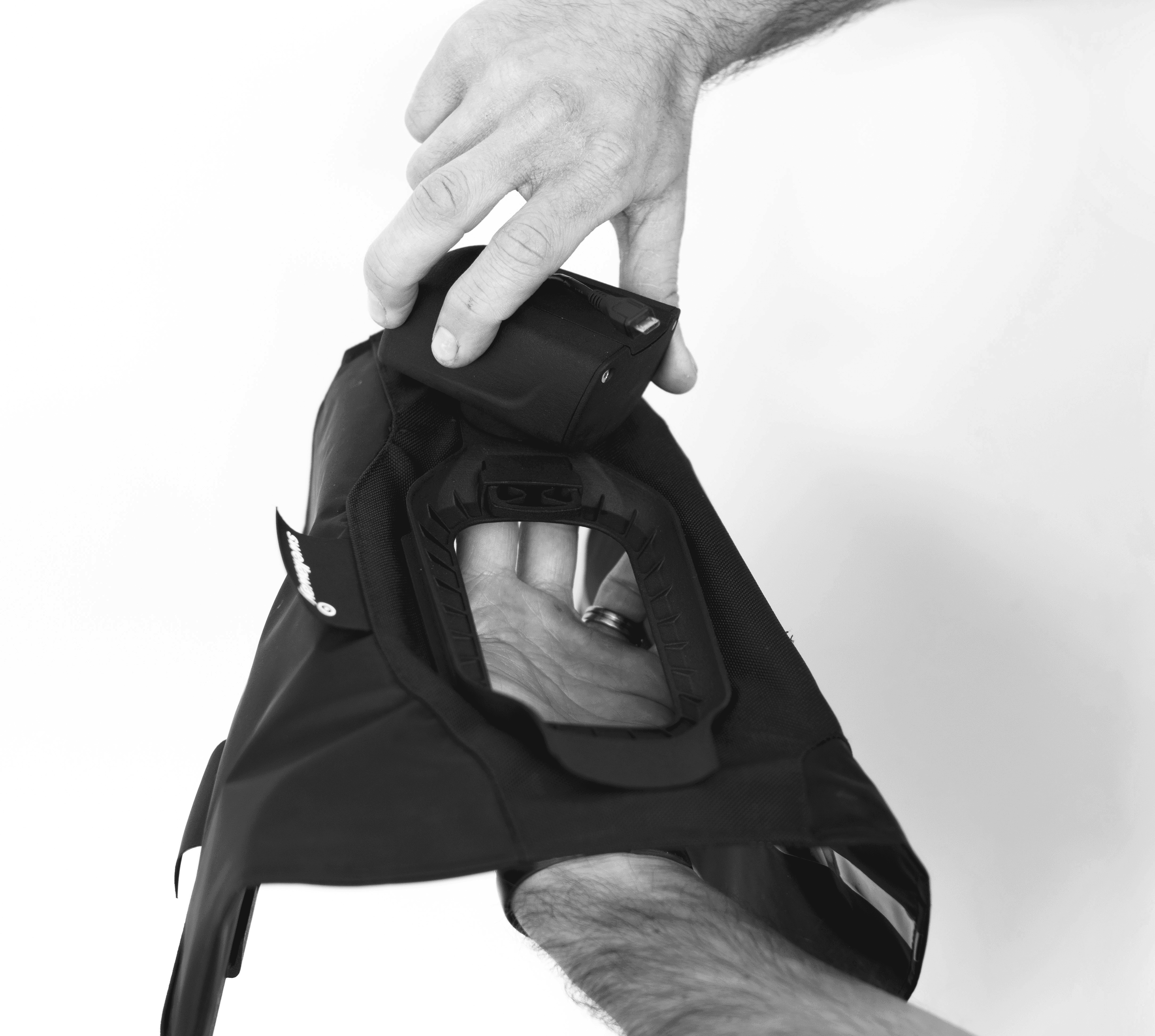
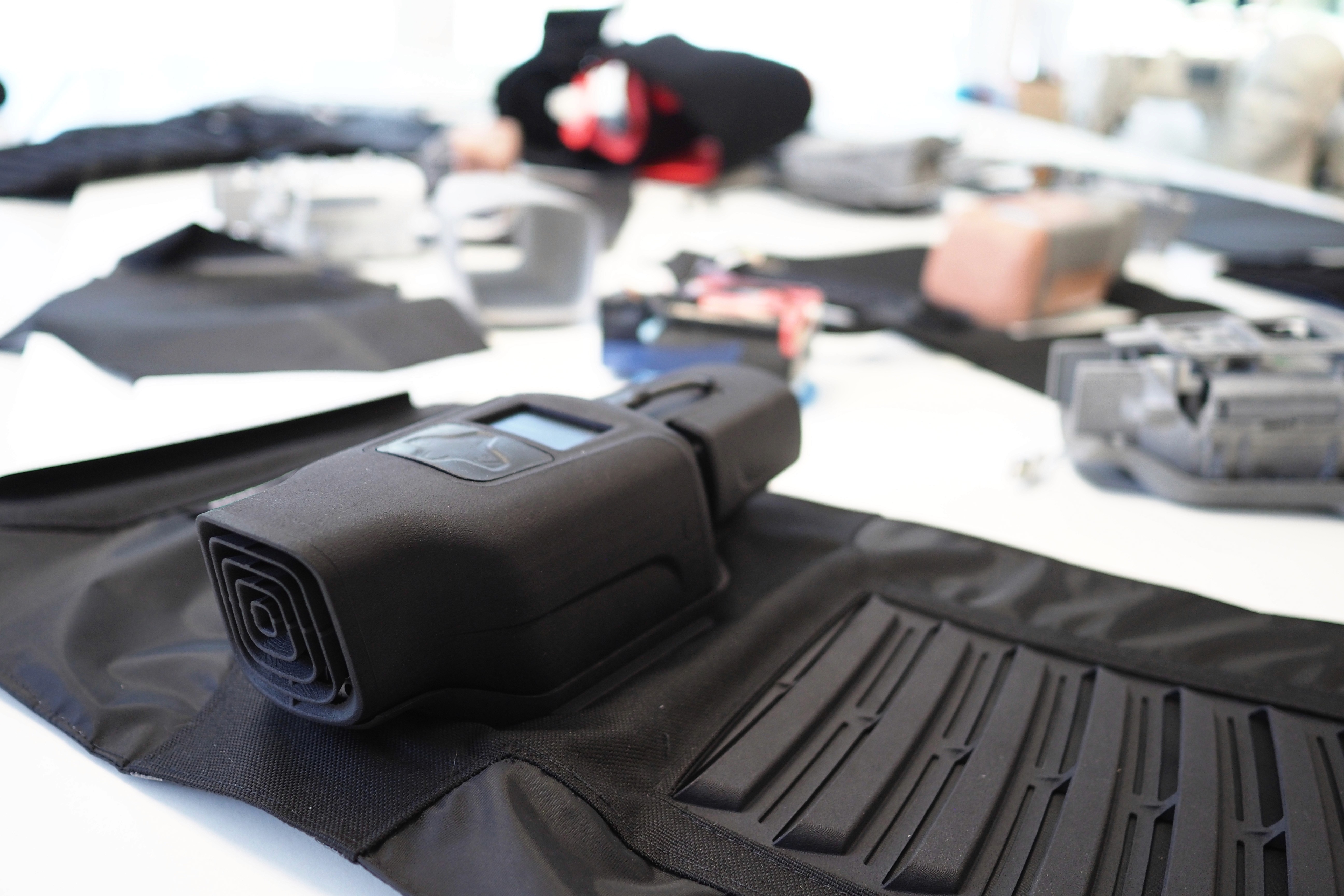
Promotion EV1 is a portable heating, cooling, and compression therapy unit designed to support athletic recovery. The product combines a physical device, a small on-device interface, and a companion mobile app that allows users to configure and control therapy sessions. I worked on this project as a product designer within a multidisciplinary consultancy environment, contributing primarily to the physical product design, on-device interaction, and system integration, while supporting digital design where appropriate.
HMI
Hardware-constrained UX
Physical–digital systems
Product design
Challenge
Unlike purely digital products, physical therapy devices introduce constraints that directly shape the user experience from power and heat management to input limitations and safety considerations.
Design decisions had to account for manufacturing, assembly, battery systems, thermal behaviour, and real-world usage, while still delivering a clear and usable interface for athletes and practitioners.
My role &
scope
My primary responsibilities focused on the physical product and system integration, working closely with engineers and manufacturers.
This included:
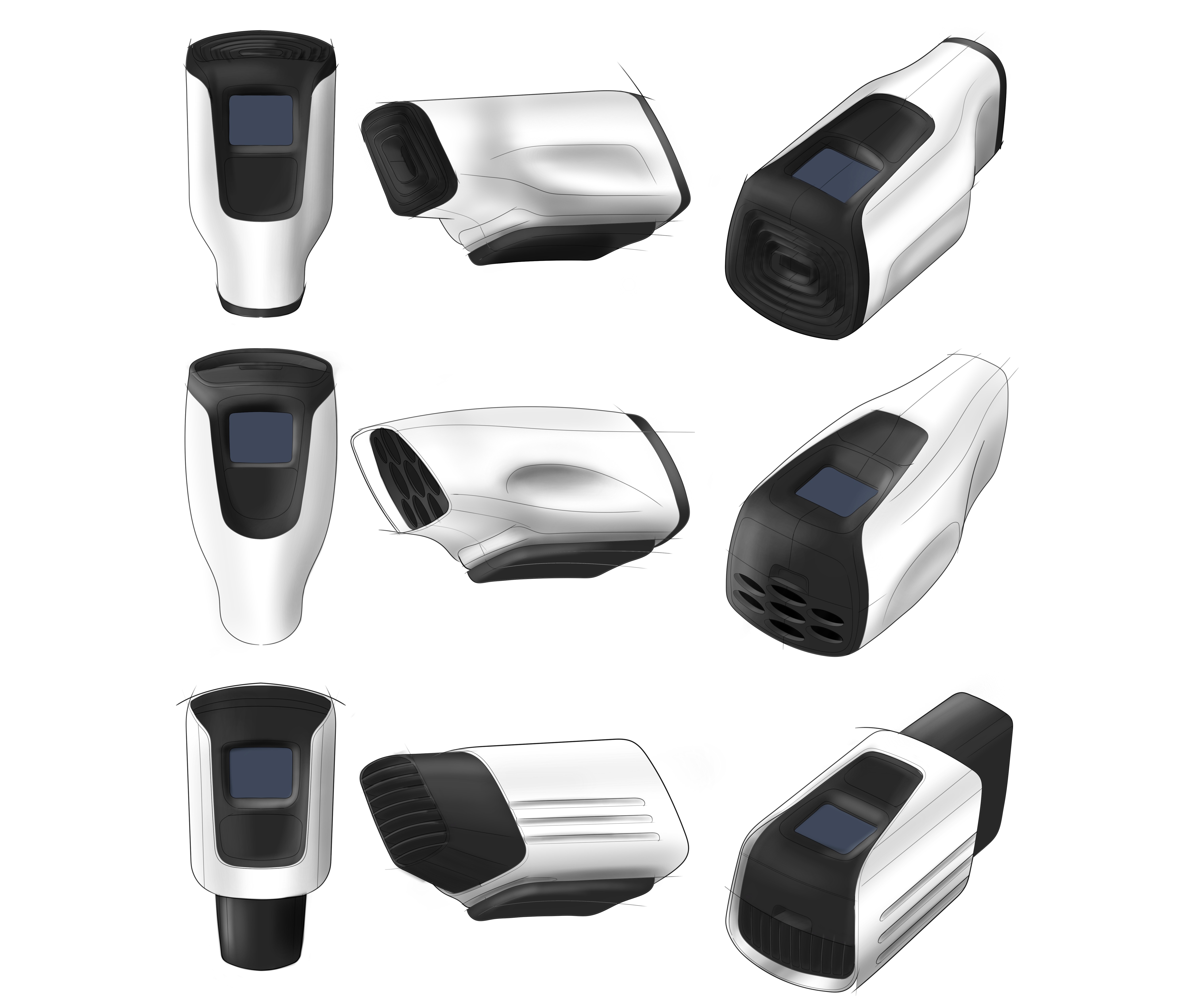
Physical product design and refinement
3D modelling and rendering
Prototyping, testing, and assembly
Supporting on-device UI design
Contributing to early digital discussions where relevant
This project is included to demonstrate system-level thinking and physical–digital integration.
When software
meets physics
In physical products, UX is shaped by forces digital designers rarely deal with heat, power, latency, ergonomics, and safety. My approach focused on designing interactions that respected these constraints rather than fighting them.
Simplicity, predictability, and physical affordances guided decisions across the device and its supporting interfaces.
Changes focused on:
Clearer hierarchy
Reduced visual noise
More predictable interaction patterns
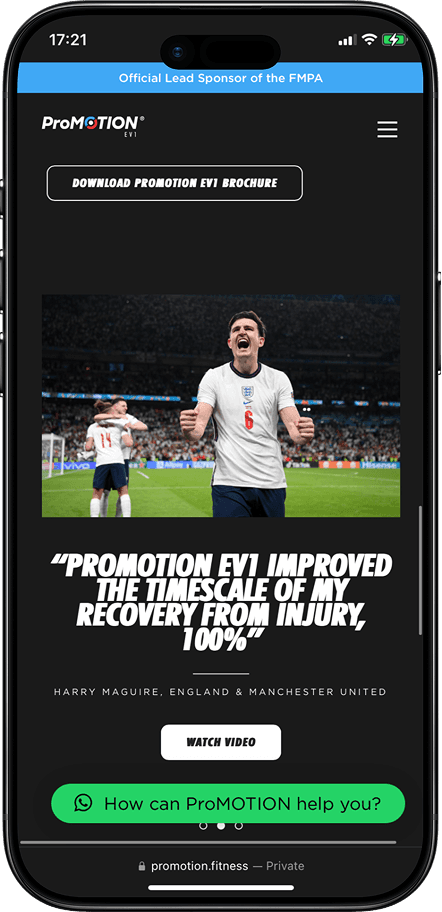
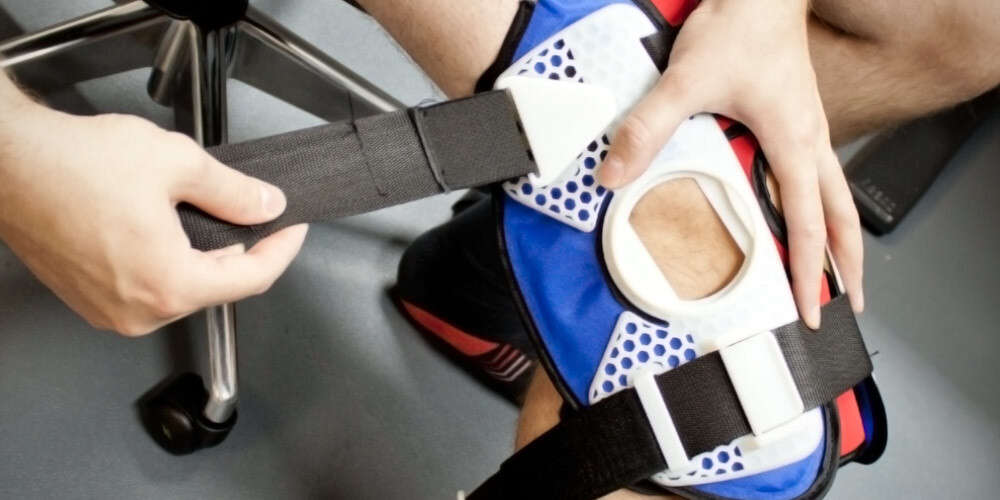
Cryotherapy is typically applied in the acute stage of an injury (up to 48-72 hours) to reduce pain and inflammation. ProMOTION EV1’s cooling application can be set from 6 to 15 degrees – the optimal temperature range advised. The addition of the compression wrap allows you to apply controlled intermittent or static compression compression levels in response to the athlete/patient’s presentation.
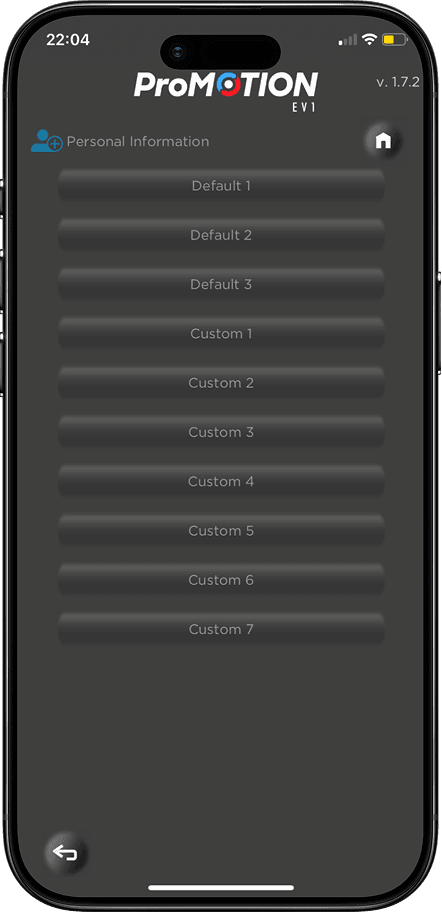
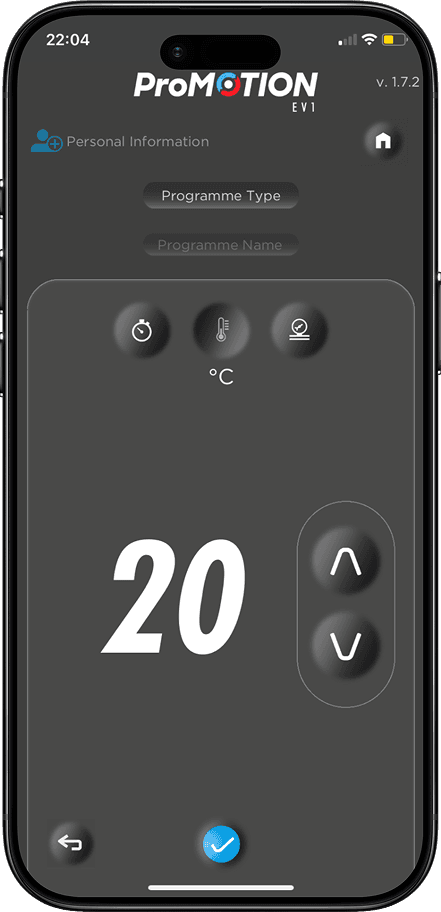
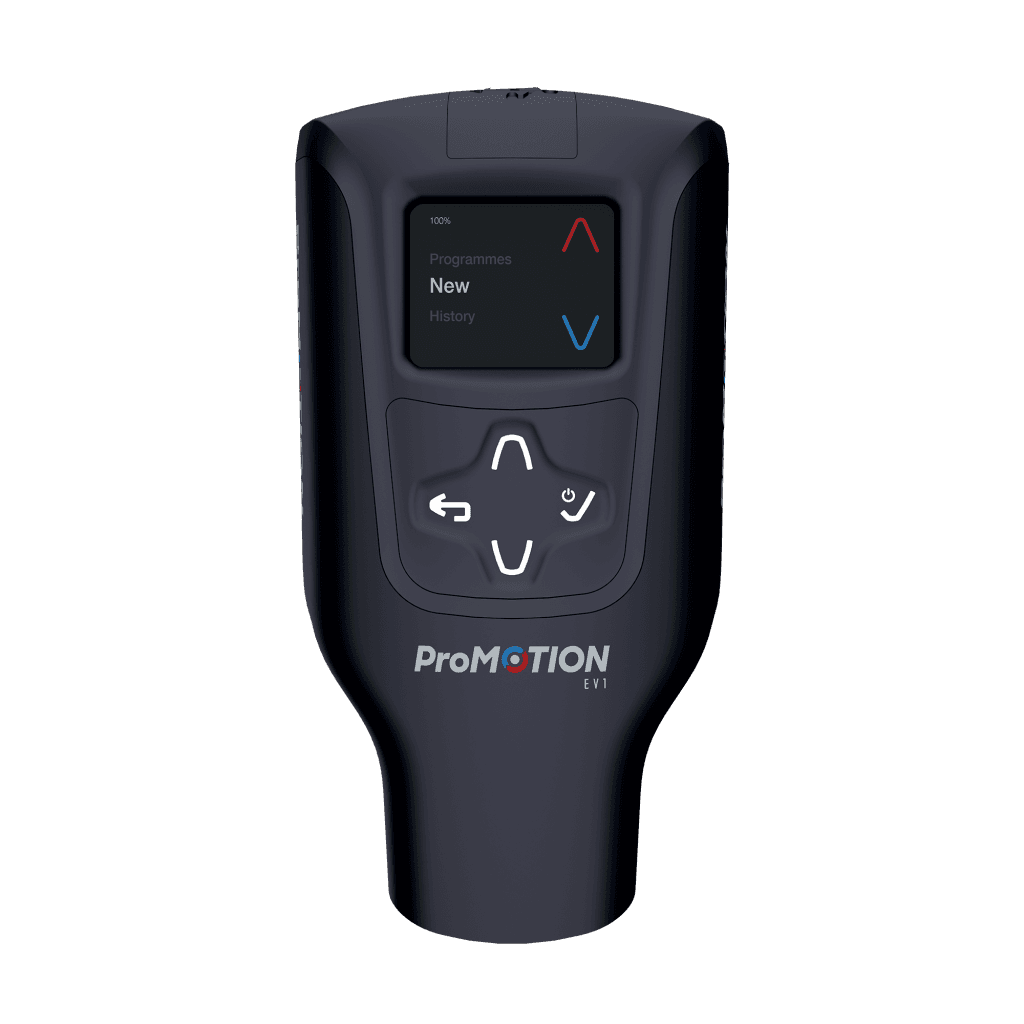
Promotion EV1 is not a single interface, but a system of interactions across hardware, on-device UI, and mobile control.
Decisions favoured:
Incremental improvement
Stability over novelty
Clear fallback states
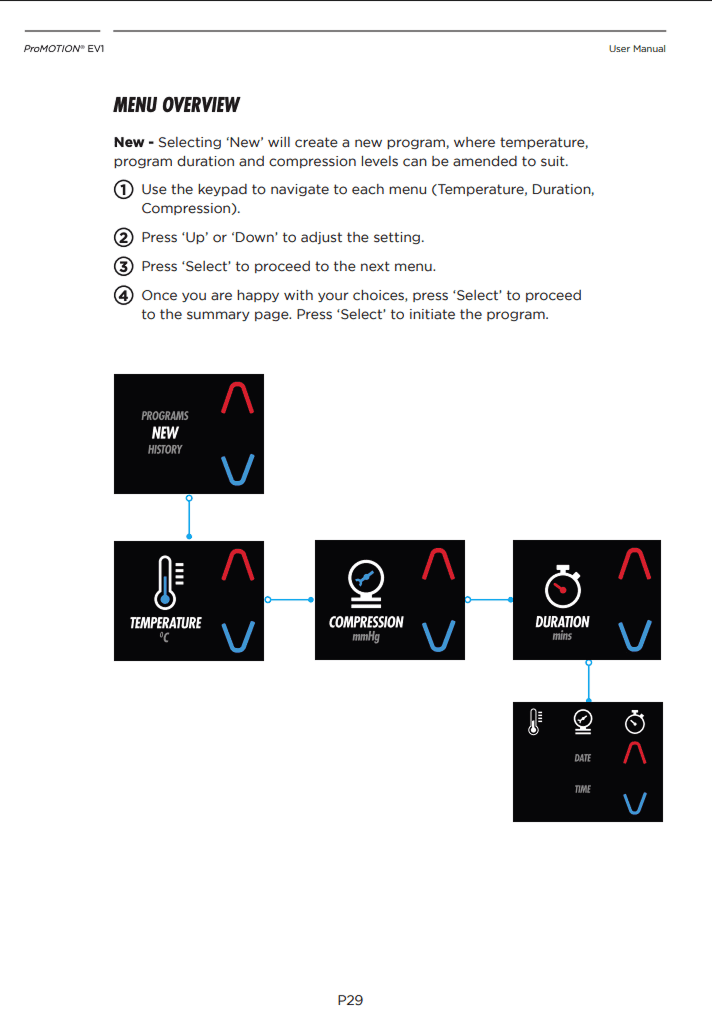
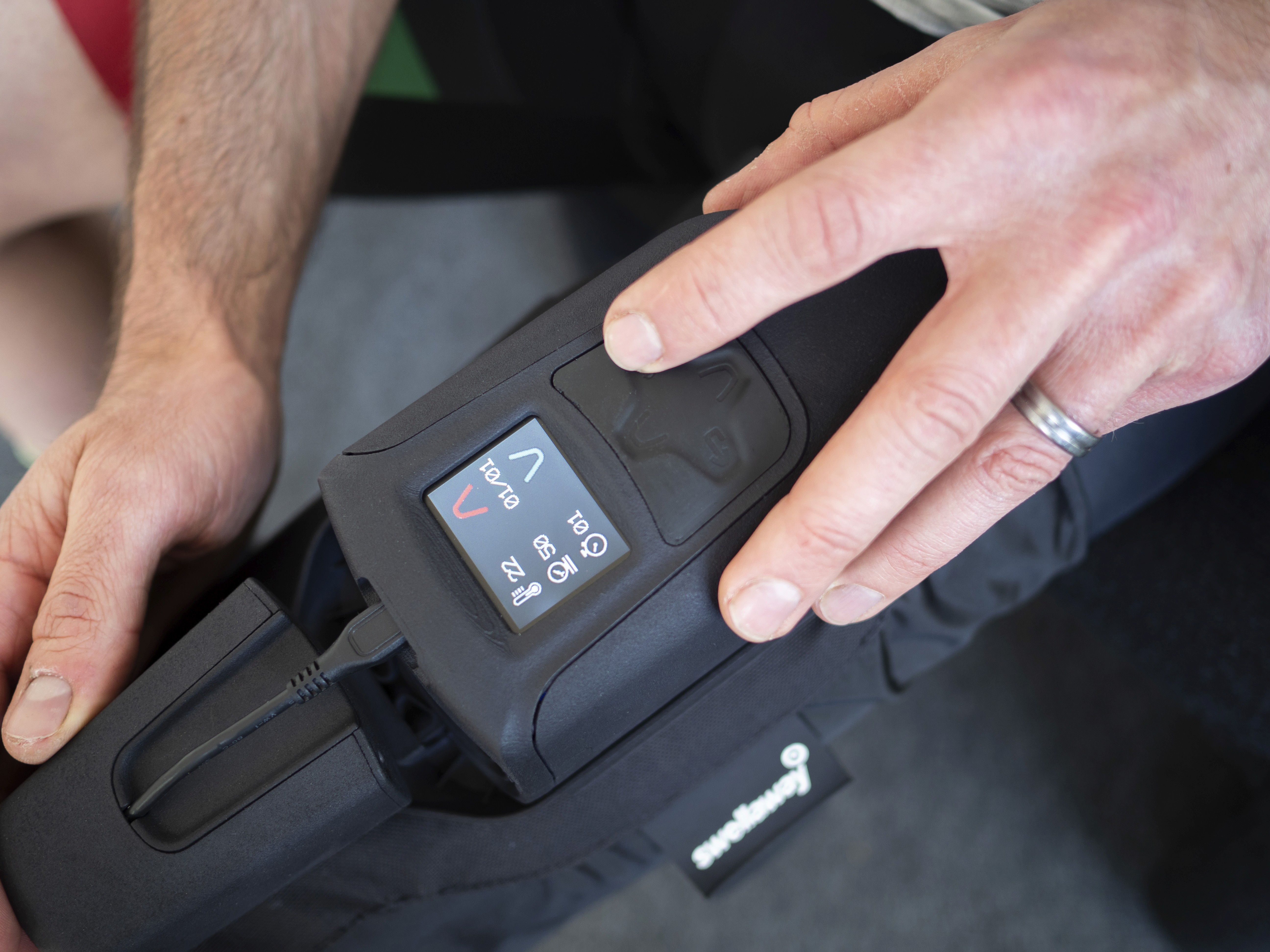
The on-device interface was limited by screen size, input methods, and safety considerations. UX decisions prioritised:
Minimal interaction steps
Clear state feedback
Reduced cognitive load during use
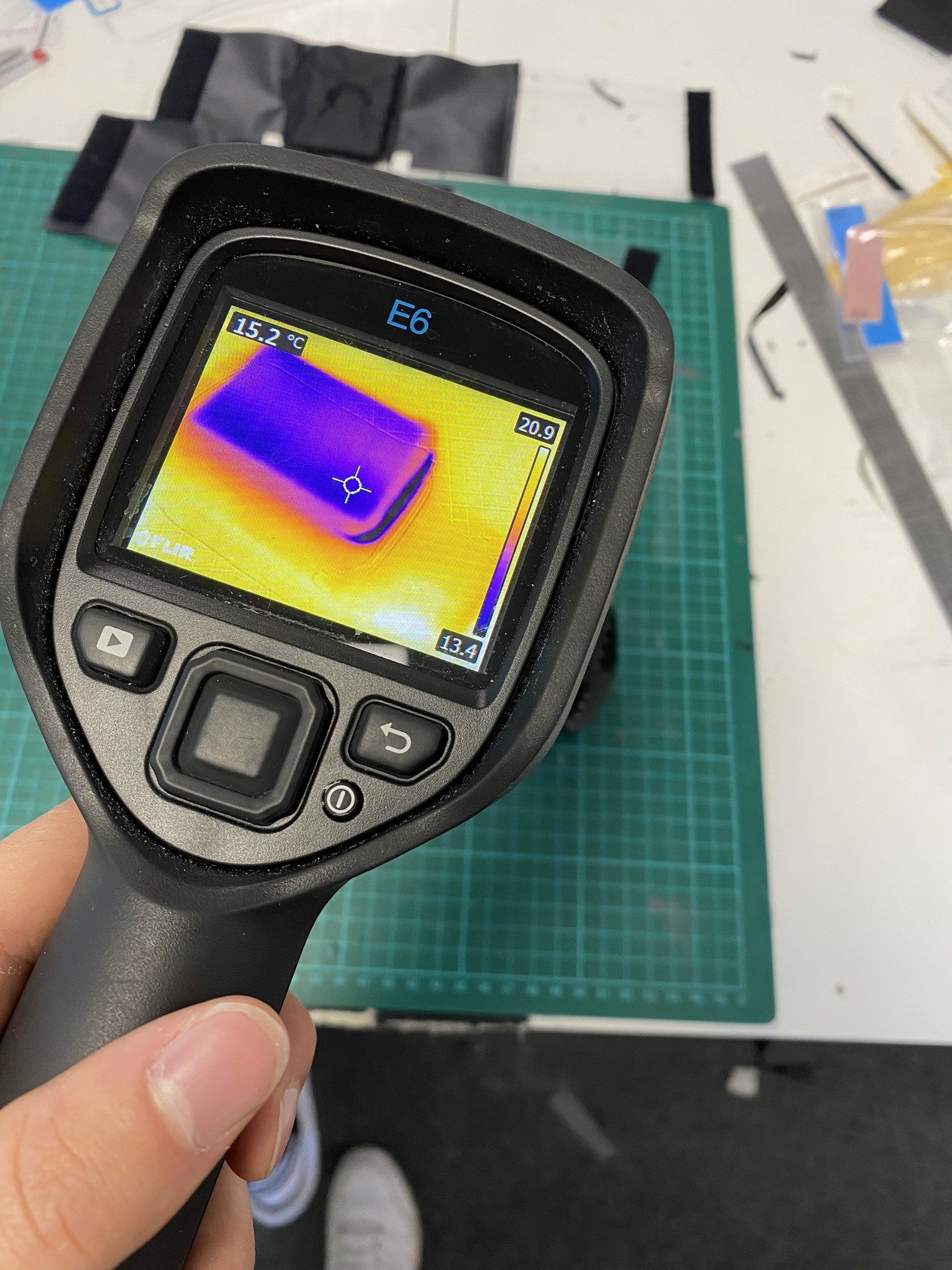
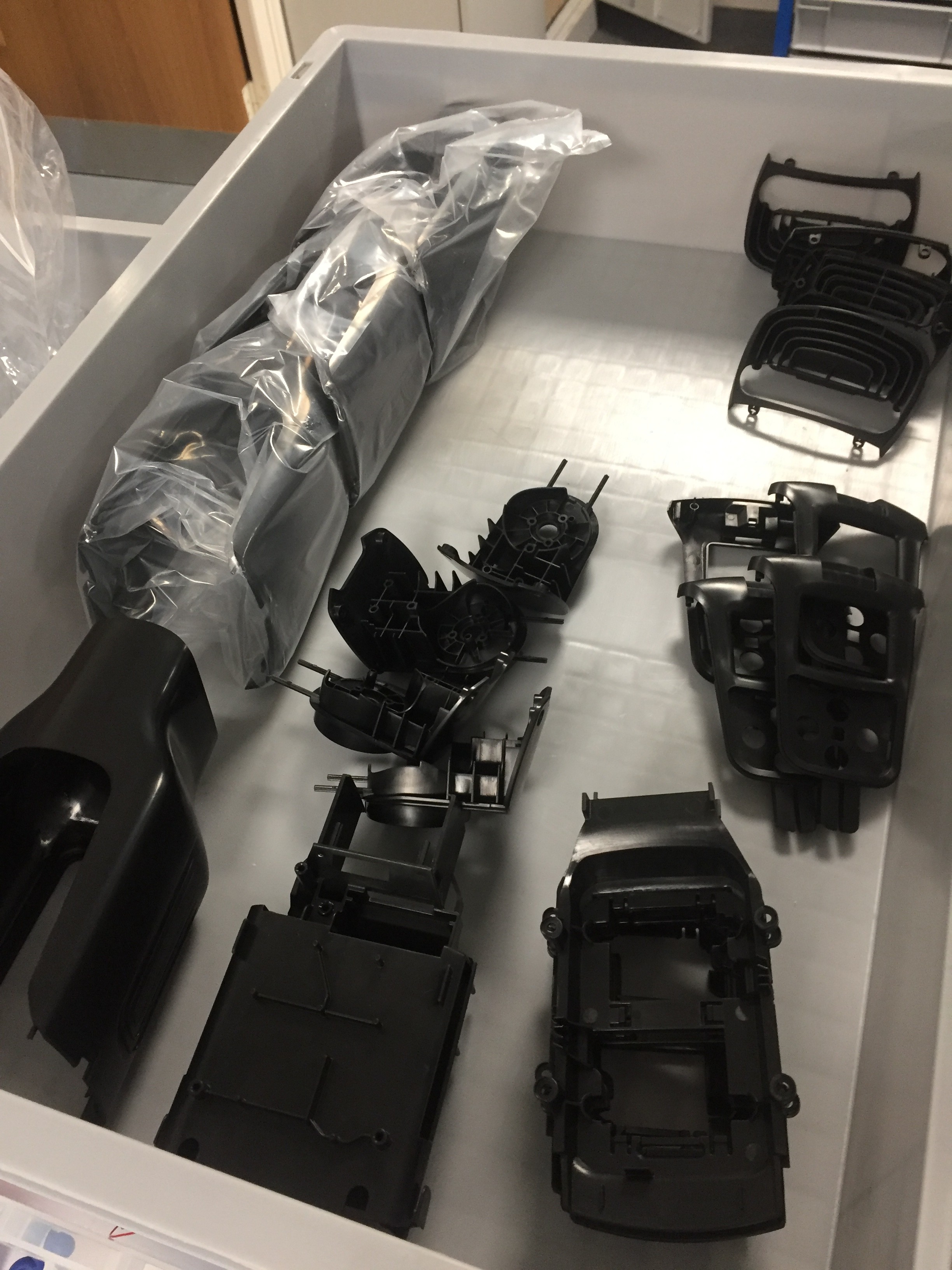
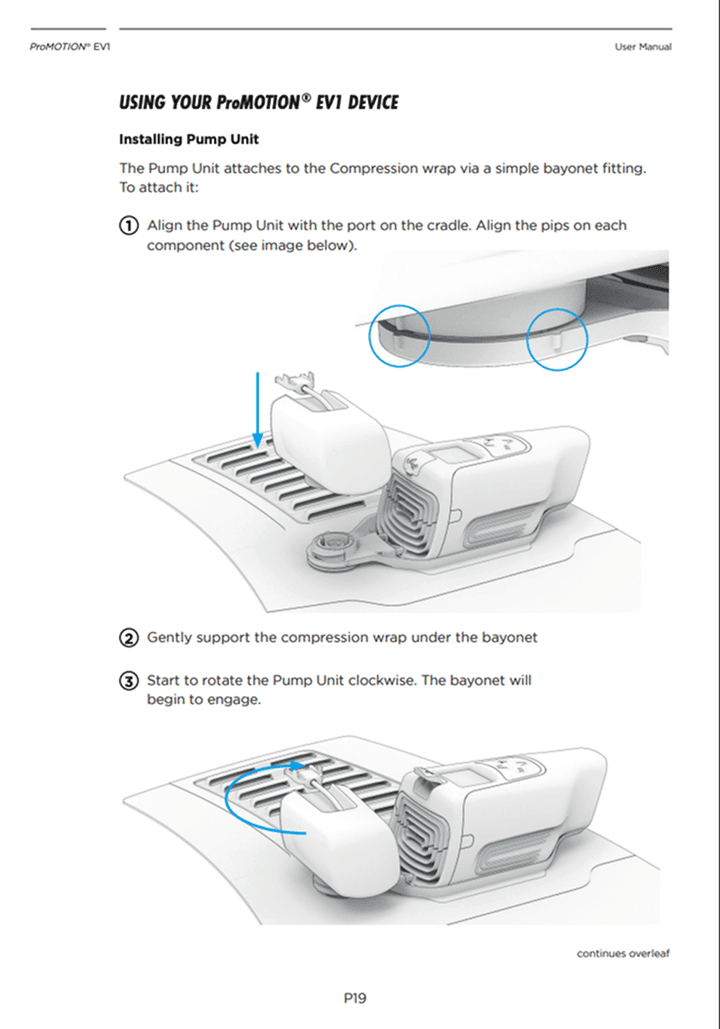
Design decisions were informed by hands-on involvement in prototyping, assembly, and testing. Working directly with components, batteries, and casings grounded UX decisions in physical reality.
Outcome
Delivered a coherent physical–digital therapy product
Supported a production-ready hardware system
Gained deep experience designing UX under physical constraints
Impact came from aligning design decisions with engineering realities rather than pursuing visual novelty.
Retrospective
Physical constraints fundamentally shape UX decisions
Systems thinking matters more than screen polish
Designing with engineers improves product realism
Hardware experience strengthens digital judgment